Tuesday, April 10, 2012

Drew Keller- Keys of storytelling


I

I think if I did all of the steps that Keller suggest that I would never get started.  I would be instantly overwhelmed and upset. But if a list of lengthy steps gets your creative juices flowing...this one is for you.

James Scott Bell- Get Some Skin in it


This convicted me like a good Sunday service.  The first novel I wrote had nothing of me in it.  It was observation, mechanics, and going through the process. It was not until I started again that I felt I had something in the game. This work in progress I am in, is me.  It is a reflection of parts of my experience.  It is my  art.

Preach it Brother Bell!!!

Monday, April 9, 2012

Inspiration Monday


Spent my day off deep inside my work in progress. It was glorious.  I feel like I have to budget my words here.  I have used them all up and don't have many left.

I need to go back and write. 

Sunday, April 8, 2012

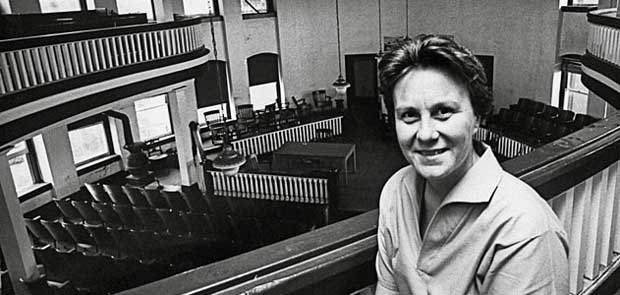
Harper Lee

Photo Source

Harper Lee wrote a single book, "To Kill a Mocking Bird." Sometimes one is more than enough.  Could this be proof that there is at least one novel in all of us?

Harper Lee grew up a rough and tumble girl, much like her character Scout.  She witnessed her father go through a similar case as the one portrayed in her novel. Unlike her father character in the book, her dad fell apart after the case.  He stopped being a lawyer and would rarely leave the house.

Friday, April 6, 2012

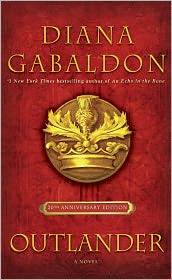
Gracious Galbaldon

photo source
When I finished my first book I went through a reading summer researching and the craft and the habits of other writers.  One of the books suggested that as a writer one must create your own network of writers that you enjoy.  Diana Gabaldon was one of my top ten. I think her biggest strength is characterization. She creates entire clans of rival families each with very distinct troubled and yet balanced personalities.  There are some you want to marry, some you want to fall off a cliff and one that makes the hair on the back of your neck stand up. 

Out of all of the writers that I sent letter to...and it was a huge stack she was the only one to write back...twice.  That makes her the very best writer that ever was.  I adore her.  


Fugacious plots

Fugacious definition
passing quickly away, transitory, fleeting.
photo source
How do you arrive at your novel's full plot? I think most of us have a scene that comes to us, or maybe a character, it could be an opening scene that comes in our dreams.  Rarely do we "see" an entire plot, those have to be crafted and explored. The exploration process is different for everyone.  


F. Scott Fitzgerald is quoted as saying, "Character is plot, plot is character."  Instead of creating an arc he might have spent time getting to know his characters with free writing until they revealed their story to him. 


Lauren Weisberger's "Devil Wears Prada" was mapped out on a basic linear progression chart. 


Devil Wears Prada Plotting
J.K. Rowling used a spread sheet to track the coming of age story of Harry Potter. 

Harry Potter Spread Sheet Plotting


It all depends.  Don't you love that answer?  I have used the spread sheet, the linear progression chart and had to write a novel to get to know my main character. It is important that as new writers we try all different methods.  Chuck Wendig over at TerribleMinds has 25 suggestions for plotting. 

What methods do you use and find work the best?

Thursday, April 5, 2012

Enigma of well written prose

"Easy reading is damn hard writing." 
~Nathaniel Hawthorne

photo source
Before I started to pursue my life as a writer I would read books, throw them down in discuss irritated with the awkward prose and dragging plot lines. Then I started to write.  This quote couldn't be more true.  The smoothest sentences are the ones that I had to wrestle with, cut, twist, rework and rip apart.  Once you mastered that one there is always the next, and the next.  The life of a writer is this unending line of work of love.   

C.S. Lewis in response to a fan letter offered this advice to a young writer. 
1. Always try to use the language so as to make quite clear what you mean and make sure your sentence couldn't mean anything else.
2. Always prefer the plain direct word to the long, vague one. Don't implement promises, but keep them.
3. Never use abstract nouns when concrete ones will do. If you mean "More people died" don't say "Mortality rose."
4. In writing. Don't use adjectives which merely tell us how you want us to feel about the thing you are describing. I mean, instead of telling us a thing was "terrible," describe it so that we'll be terrified. Don't say it was "delightful"; make us say "delightful" when we've read the description. You see, all those words (horrifying, wonderful, hideous, exquisite) are only like saying to your readers, "Please will you do my job for me."
5. Don't use words too big for the subject. Don't say "infinitely" when you mean "very"; otherwise you'll have no word left when you want to talk about something really infinite.
 Advice like this sounds so straight forward. However, the implementation of it is the true challenge. It is almost debilitating to get started if you starting thinking of it.  The key is to write ugly, get it out.  Once it is out the real work begins.  Take it one sentence at a time.  Torment each sentence, paragraph and get violent with your edits.  When you think you are done hand it off to your beta readers to vet out as much of it as possible.

On this Easter weekend what prose are you tormenting?